Mismatched Panel Laps
New panels with a slightly different rib profile never nest tightly on the old ones. Water rides into the gap at each rib.

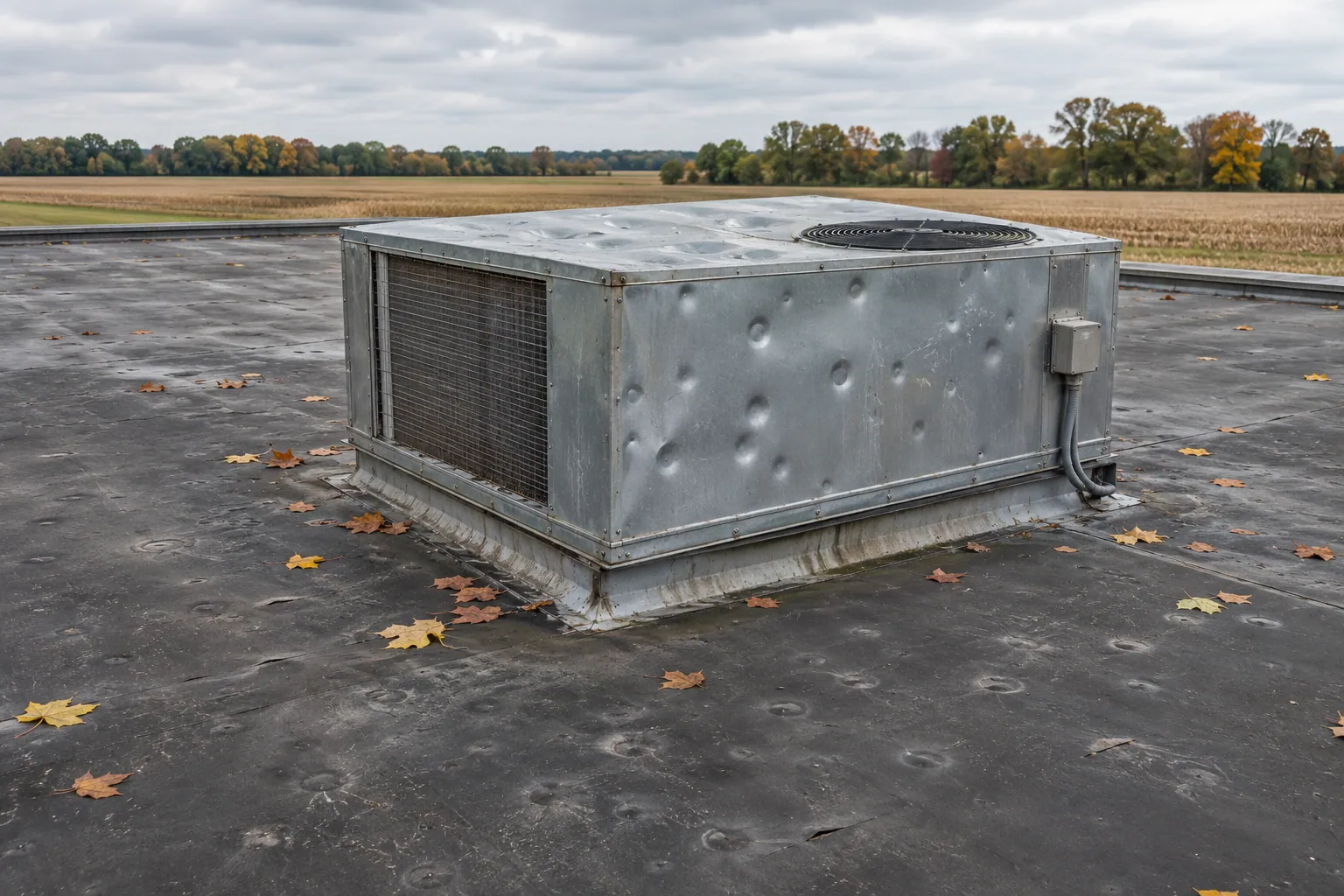
Call a Dawson Springs commercial roof repair contractor when a rebuilt roof leaks where new material joins the older roof around it.
A Dawson Springs commercial roof repair contractor looks first at the joints between repaired and original roof. Many roofs fixed after the December 2021 tornado join new material to older sections, and the National Weather Service documented that tornado path through town.
Leaks on those roofs tend to show up at the tie-ins, where two materials or two panel profiles meet.
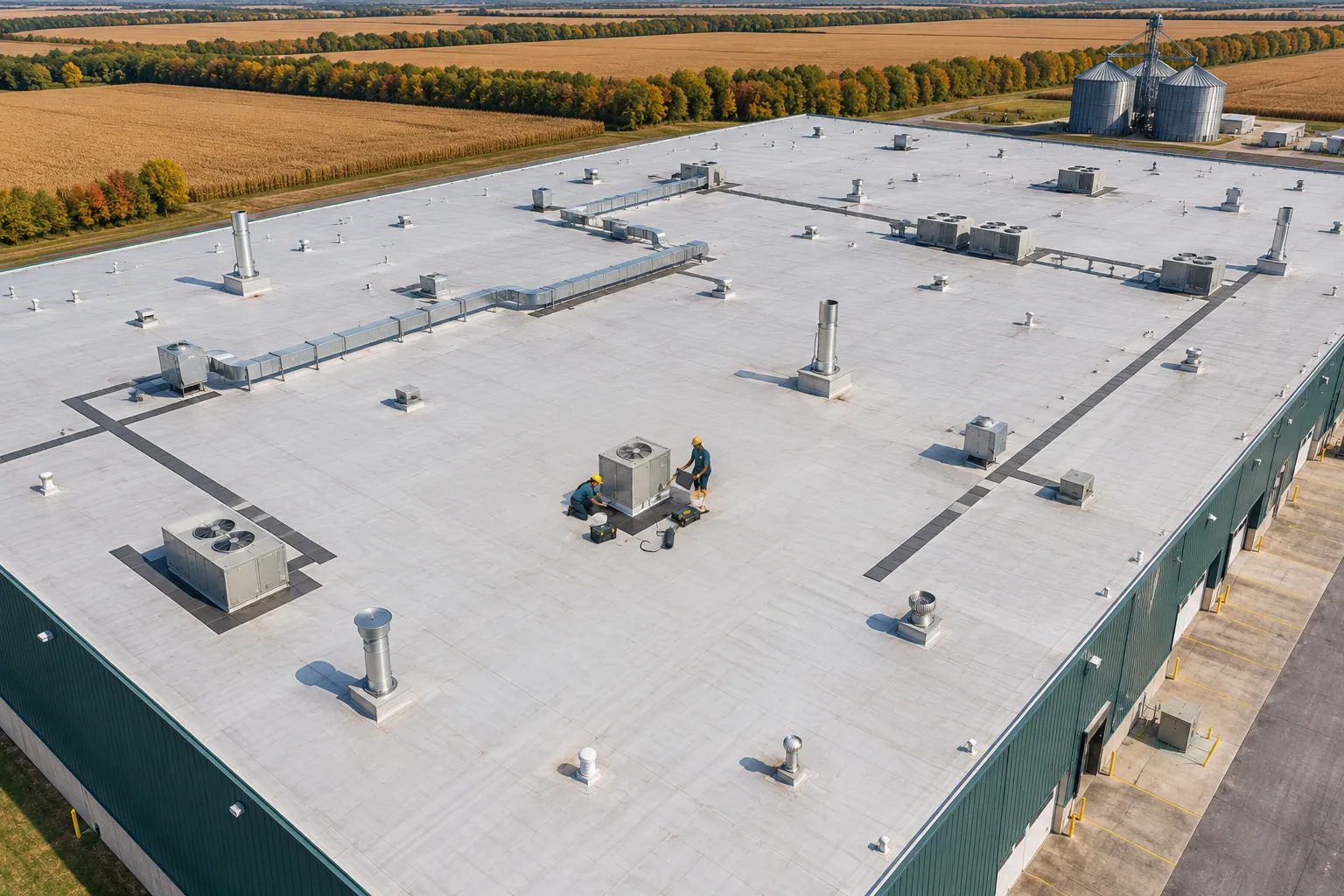
These tie-in problems come up on Dawson Springs roofs that were partly rebuilt.
New panels with a slightly different rib profile never nest tightly on the old ones. Water rides into the gap at each rib.
Fresh TPO welded to weathered sheet without a proper cleaning and test weld can peel apart at the seam.
Rebuilt walls often get new flashing that ends short of the older roof, leaving an open joint at the corner.
Screws driven into purlins bent by the storm sit at an angle, so their washers never seat flat.
Original screws on the old section wear out years before the new ones, so leaks move to the older half of the roof.
Gutters spliced from old and new sections leak at the splice and sag where the hanger spacing changes.
Fixing tie-ins on a rebuilt Dawson Springs roof makes the old and new sections work as one roof.
Three repairs cover most tie-in leaks on rebuilt Dawson Springs roofs.
A transition panel or closure shaped to both profiles goes in at the joint, sealed with butyl tape and stitch screws.
The old sheet is cleaned and test-welded, then a cover strip is welded across the tie-in seam.
Wall flashing is extended and counterflashed where the rebuilt wall meets the older roof.
Mark the spot inside where the stain lines up with the rebuilt section. That line points the trace straight to the tie-in.
Repairs on rebuilt roofs start by finding exactly where old and new materials meet.
The tie-in lines, rebuilt wall flashing, gutter splices, and screws on both sections are checked and marked.
Panel profiles, membrane age, and fastener types on each side are noted so the repair matches both.
Twisted purlins under the tie-in are straightened, sistered, or replaced so new screws hold.
Transition panels, closures, cover strips, or extended flashing close the joint between sections.
Worn screws on the older section are replaced and gutters resealed, then the work is photographed.
Is your building near Dawson Springs instead of in it? We repair commercial roofs across the towns below; for anywhere else, call us or send us a message.
Home base for repairs across Christian County.
Hopkinsville Commercial Roof Repair →Storefront, office, and strip center roofs with their own inspector.
Oak Grove Commercial Roof Repair →Deck and purlin repairs routed through the state inspector.
Elkton Commercial Roof Repair →Flat roofs where drains and scuppers fell behind in 2025.
Cadiz Commercial Roof Repair →Metal buildings with end laps tested by long April rain.
Princeton Commercial Roof Repair →Drains, conductor heads, and gutters after heavy April 2025 totals.
Greenville Commercial Roof Repair →Straight-line miles from central Hopkinsville. Listed towns are covered too.
Many repaired roofs join new material to older sections, and the tie-ins leak first. Check laps between new and old metal panels with mismatched profiles, membrane patches welded to aged TPO that held poorly, flashing at rebuilt walls meeting older roof areas, and fasteners driven into storm-twisted purlins. Permit questions start at Dawson Springs city hall.
The joint is opened, both sides are cleaned, and a matching transition is installed. On metal that means a panel or closure that fits both profiles. On membrane, it means a cover strip welded after a test weld on the old sheet.
Often, yes. A shaped closure and butyl tape fill the gap at each rib, and stitch screws pull the lap tight. Panels with real rust-through still get replaced.
Dawson Springs is in Hopkins County. Start at city hall, then go to the inspector serving Madisonville and the county, or to the state inspector listed on the DHBC sheet.
Because its screws and sealants are years older than the new section. Once the tie-in is fixed, the older washers and laps are usually next to fail.
Any drawings, invoices, or photos from the storm repair that show where new material starts. Knowing which panels, membrane, and flashing were replaced, and what profile or brand went on, lets the repair match both sides of each tie-in without guessing.
Show us where the rebuilt roof meets the original. The tie-in gets traced and joined properly.